Why Training Takes Too Long in Manufacturing (And How Teams Cut It in Half)
Jure Špeh, Co-founder and CTO
Manufacturing training often takes longer than expected due to inconsistent instructions and reliance on shadowing. Learn how teams reduce onboarding time using video-based, AI-powered work instructions.
30-second summary:
Manufacturing training takes too long because it depends on shadowing, verbal explanations, and outdated SOPs. Teams that standardize work instructions from real process videos reduce onboarding time and free supervisors from constant retraining.
The hidden cost of slow training
Most manufacturing leaders know training is expensive.
Few realize how much time it actually consumes.
Not just formal onboarding—but:
- Supervisors repeating the same explanations
- Operators stopping work to ask questions
- Inconsistent execution across shifts
- Re-training after small process changes
Training quietly becomes a permanent tax on productivity.
Why onboarding stretches longer than planned
On paper, training looks simple:
- Show the task
- Let the operator try
- Correct mistakes
- Move on
In reality, it breaks down because:
-
Training depends on people, not systems
If the right person isn’t available, learning stalls. -
Instructions are informal
“Do it like this” works until someone new joins or switches shifts. -
Documentation doesn’t match reality
SOPs exist, but they don’t reflect how work is actually done today.
This is why onboarding timelines drift from weeks into months.
Shadowing doesn’t scale
Shadowing works when:
- Teams are small
- Turnover is low
- Processes rarely change
None of these are true anymore.
As teams grow and roles rotate:
- New hires learn different versions of the same task
- Best practices depend on who trained you
- Supervisors become the bottleneck
Most operations managers eventually realize:
“We’re training faster, but not more consistently.”
What actually shortens training time
The fastest way to train someone is to show them exactly what good looks like—every time.
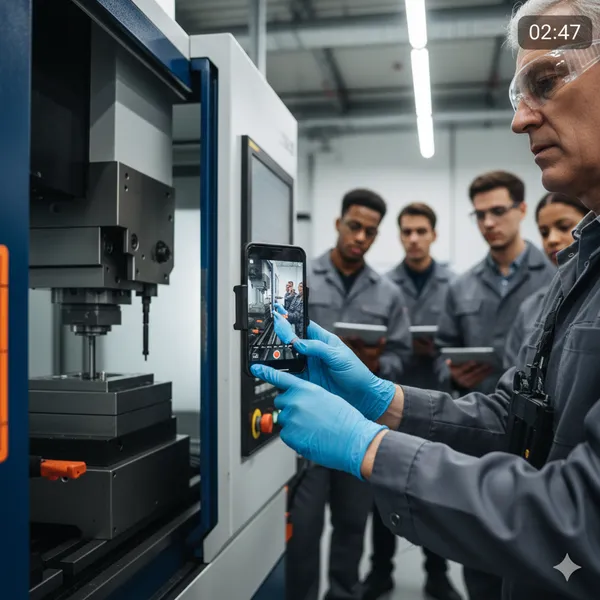
Video-based work instructions do this by:
- Showing the real sequence of steps
- Capturing timing, tool use, and safety checks
- Removing interpretation from training
When video is turned into structured, step-by-step instructions, training becomes repeatable instead of personal.
Why AI changes training economics
Video alone helps, but it doesn’t scale.
AI makes video usable by:
- Splitting recordings into clear steps
- Highlighting key actions and warnings
- Creating a consistent structure across all tasks
- Making instructions easy to update when processes change
Instead of explaining the same task repeatedly, supervisors point operators to the same reference—every time.
Training that fits the modern workforce
Today’s manufacturing workforce expects:
- Visual learning
- On-demand access
- Clear, concise instructions
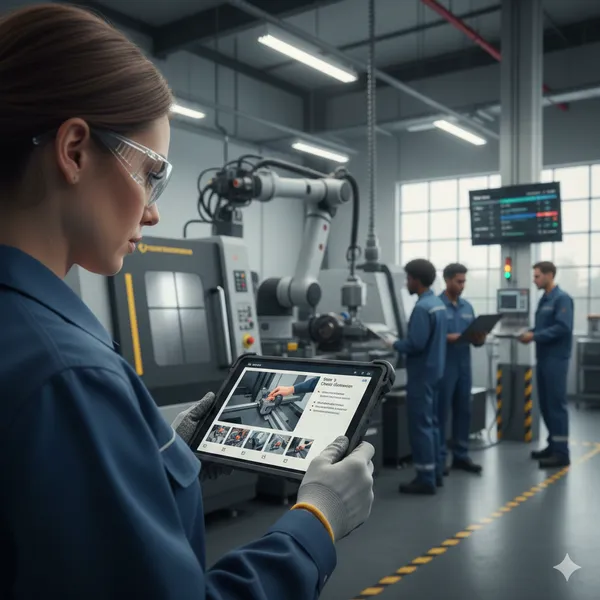
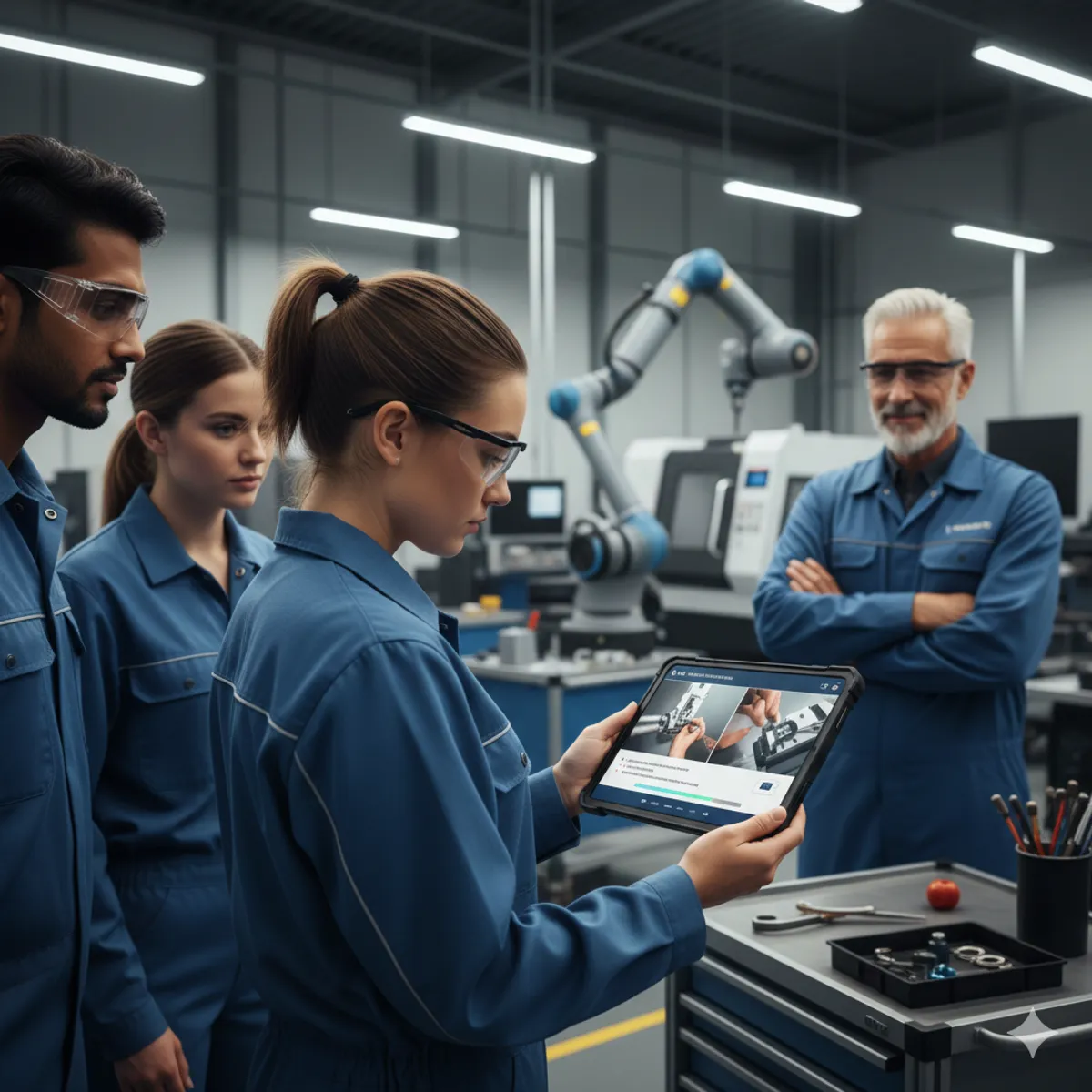
When work instructions live on phones or tablets:
- New hires learn independently
- Gen Z workers engage naturally
- Foreign-language teams follow the same standard
- Questions decrease instead of multiplying
Training shifts from interrupt-driven to self-serve.
From onboarding to continuous learning
Shorter training time is only the first win.
Once instructions are digital and structured:
- Operators revisit steps when unsure
- Refresher training happens naturally
- Process improvements propagate faster
- Knowledge stays consistent across shifts and sites
Training stops being an event—and becomes infrastructure.
The real outcome
Teams that rethink training:
- Onboard faster
- Reduce supervisor overload
- Improve consistency
- Adapt quicker to change
The goal is not to eliminate human teaching.
It is to stop relying on it as the only system.
That is how manufacturing teams cut training time without cutting corners.
Frequently Asked Questions
How long does it take to reduce onboarding time using video-based work instructions?
Most manufacturing teams see measurable improvements within the first few weeks. Initial training becomes faster almost immediately because new hires can follow standardized steps independently. Larger reductions in overall onboarding time typically happen over 1–3 months as more processes are documented and reused.
Does this approach replace supervisors and hands-on training?
No. Supervisors remain essential for coaching, judgment, and edge cases. Video-based work instructions reduce repetitive explanations, allowing supervisors to focus on higher-value support instead of repeating the same basics to every new hire.
Which manufacturing roles benefit the most from this type of training?
Roles with repeatable tasks benefit the most, including machine operators, assemblers, setup technicians, quality inspectors, and maintenance staff. Any role where consistency, sequence, and safety matter sees faster ramp-up and fewer mistakes.
How do video-based instructions handle process changes and continuous improvement?
Because instructions are generated from real videos, updates are simple. Teams record the improved process, regenerate the steps, and review the changes. This keeps training aligned with how work is actually done, instead of relying on outdated SOPs.
Can this training approach work for multilingual and high-turnover teams?
Yes. Visual instructions reduce reliance on language-heavy explanations, and AI-supported translation ensures consistency across languages. This makes it especially effective for multilingual teams and environments with frequent onboarding.
If you’d like to learn more, join TagPlan Work Instructions Early Access or send us an email with your question.